Latest Posts

Enchantology has now moved to enchantology.com. If you'd like to stay subscribed to the blog, you can subscribe via email on the new site. All old posts from this blog will be available on the new site.

Hope you'll stick with us through the move!

- Paige
2015 has been a really productive reading year for me so far! I managed to read 11 things this month, two of which were graphic novels and one of which was an audiobook. Onto the books...

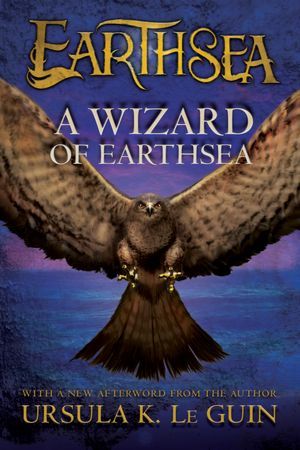
A Wizard of Earthsea by Ursula K. LeGuin
Book One of the Earthsea Cycle
3.5 out of 5 stars.
A Wizard of Earthsea is regarded as a fantasy classic, and it reads like one. If I'd read this before having read a lot of other fantasy books, perhaps my reading experience wouldn't have felt somewhat redundant. There are a lot of really powerful moments, and times where Le Guin's somewhat distant and poetic writing style flourishes, but most of it felt quite slow. Overall it was good and did a great job imparting its themes on the reader, though some of the elements I expect from novels seemed to be lacking a bit - or at least seeming to be as any originality it might have once had has been mixed into numerous fantasy books over the years to the point of being cliché.

The Crown Conspiracy by Michael J. Sullivan
Book One of the Riyria Revelations Series
3 out of 5 stars.
This was a lot of fun! It's quite a straightforward and simple story, so it doesn't offer much in terms of originality or characters with a lot of depth... but for what it is, it's pretty great. Probably a good read for anyone looking for a fun fantasy adventure without all of the density that can come with these sorts of books, and also those inexperienced with fantasy and hoping to change that. Looking forward to continuing this series as I've heard the books get better as you go along.
Brown Girl Dreaming by Jacqueline Woodson
4 out of 5 stars.
Brown Girl Dreaming is an award-winning memoir written in verse. It follows Jacqueline's experience as an African American child growing up in the 1960's/70's in America. I really enjoyed this but I think I would have loved it even more if I’d been able to read it when I was a part of its target audience, which seems to be children. The ending in particular was really moving and wraps up everything quite beautifully. Overall a really quick and enjoyable read.


The Bone Season by Samantha Shannon
Book One of The Bone Season Series
5 out of 5 stars.
This was a reread, and I had to give it the same glowing rating that I originally gave it when I read it in 2013. Even though I already knew how this book ended, I had to stay up all night reading this to get to the end. The Bone Season certainly isn’t perfect, but just works SO WELL for me. (I also forced my mom to read this, and she also loved it. We have quite different tastes in books but we do agree on some rare books.) Part of my reason for rereading this was so that I could write a review, since I didn't the first time I read it... but I realized I never wrote a review because all I can do when talking about this book is incoherently gush about it. So...

Hyperbole and a Half by Allie Brosh
3.5 out of  5 stars.
Hyperbole and a Half is a collection of blog posts from Allie Brosh, who mixes really simple illustrations and text to discuss random topics... whether it be stories about her dog or her experience with depression. It was loads of fun! I think it could have been organized a bit better than it was - perhaps if the stories had been presented in a more chronological fashion it would have felt a little less scatterbrained. We get some stories from Allie's childhood and some from adulthood, but they're all mixed around haphazardly. Very entertaining though and I'd certainly recommend it if you've ever stumbled across one of Brosh's posts and enjoyed them.

The Mime Order by Samantha Shannon
Book Two of The Bone Season Series
4 out of 5 stars.
Part of my reasoning for rereading The Bone Season was because its sequel, The Mime Order, was coming out. As much as I loved The Bone Season, you
know I had to preorder this and read it ASAP. This was a pretty great sequel, though I wasn’t invested in this as much as I had been with The Bone Season. I found this a bit predictable, and I didn’t think it had the same level of readability to me that The Bone Season had - where even though you know what’s going to happen, it’s still a thrill ride. Nonetheless a pretty great sequel and an ending that leaves you NEEDING the next book.

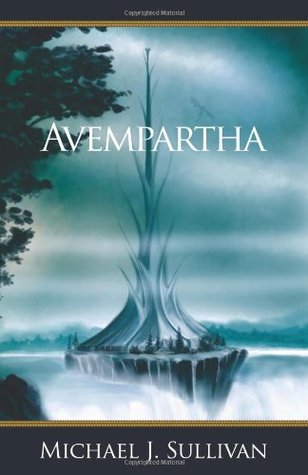
Avempartha by Michael J. Sullivan
Book One of the Riyria Revelations Series
3 out of 5 stars.
This sequel to The Crown Conspiracy was pretty equal to the first book, in my opinion. I think there were some improvements in the writing, but this still felt like a 3 star book to me. There were some very predictable parts and the characters are still a bit distant, even though I’ve now been with them for almost 700 pages. Nonetheless, I’ve heard fantastic things about the rest of the series and can’t wait to continue this. Just need the next book to hurry up and arrive in the mail!
Seriously… I’m Kidding by Ellen Degeneres
2.5 out of 5 stars.
Guess who tried listening to an audiobook! Me, obviously. (Who else would it be?) Unfortunately, not my cup of tea. This was a pretty quick one, but it felt kind of pointless. This book was a little all over the place... and as much as I like Ellen, wasn’t a huge fan of her narration. I kinda felt like she read it, for the most part, as if she didn't care which made me feel like I shouldn't bother caring either.

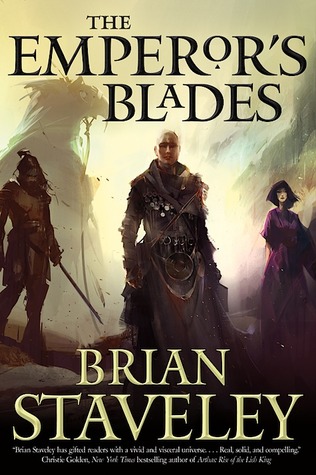
The Emperor’s Blades by Brian Staveley
Book One of the Chronicle of the Unhewn Throne Trilogy
4 out of 5 stars.
I’m working on a full review for this one, so keep your eyes peeled! I thought this was one of those fantasy books that just reads really easily, but it doesn’t sacrifice world-building to do so. The world Staveley created is a pretty cool one, and I’m looking forward to seeing how it expands in the next installments. This follows three POVs, all belonging to the children of an emperor who is murdered at the beginning of the novel, though it’s rather unbalanced and mostly focuses on the two sons and the training they’re going through away from home. If you’re not a fan of coming-of-age, training sequence stories, this probably isn’t your thing considering it’s basically two of those in one. Again, full review coming with more of my thoughts!

The Song of Achilles by Madeline Miller
2 out of 5 stars.
Talk about a disappointment… I thought The Song of Achilles would be exactly my cup of tea, and boy was I really wrong. This was painful for me to get through. So much eye-rolling and "Do I have to keep reading this?" I thought this would be fantastic. Lyrical writing? Representation of non-hetero relationships? Mythological retelling? Count me in! Unfortunately, this just came of as a really annoying romance with uber flat characters. It left me feeling so betrayed that I didn’t want to read anything afterwards because of trust issues. *shakes fist at book*

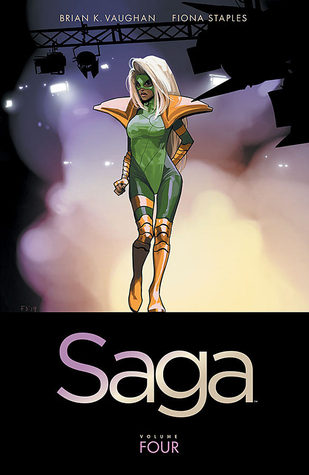
Saga Volume 4 by Brian K. Vaughan and Fiona Staples
4 out of 5 stars.
I don't know why I always think it's a good idea to read the next installment of this series while I'm at the library. Trying to hide what I'm reading whilst kids are frolicking around is REALLY AWKWARD especially when BOOM random depiction of oral sex comin' at ya.
Anyway, this is probably as good as the other volumes, which I typically give 5 stars, I've just been a little less generous with my star ratings recently. The story-line was good, the art is fantastic as always, and GhĂĽs is THE CUTEST THING OF ALL TIME. Still my favorite graphic novel series. Can only recommend to mature readers, however.

Those were all of the books I read in February! It was a pretty productive month, especially considering this was the month where I got a new full-time job which was a pretty massive change. Hopefully I'll be able to keep reading loads in March despite my now busier schedule. In terms of my to be read list for the next month, I'm hoping to read the four books I just picked up from the library, which you can see here, and the 3rd and 4th book in the Riyria Revelations.

What was the best book that you read this month? Did you have any really disappointing reads?

I am tired of being used, hurt, and cast aside.
Adelina Amouteru is a survivor of the blood fever. A decade ago, the deadly illness swept through her nation. Most of the infected perished, while many of the children who survived were left with strange markings. Adelina’s black hair turned silver, her lashes went pale, and now she has only a jagged scar where her left eye once was. Her cruel father believes she is a malfetto, an abomination, ruining their family’s good name and standing in the way of their fortune. But some of the fever’s survivors are rumored to possess more than just scars—they are believed to have mysterious and powerful gifts, and though their identities remain secret, they have come to be called the Young Elites.
Teren Santoro works for the king. As Leader of the Inquisition Axis, it is his job to seek out the Young Elites, to destroy them before they destroy the nation. He believes the Young Elites to be dangerous and vengeful, but it’s Teren who may possess the darkest secret of all.
Enzo Valenciano is a member of the Dagger Society. This secret sect of Young Elites seeks out others like them before the Inquisition Axis can. But when the Daggers find Adelina, they discover someone with powers like they’ve never seen.Adelina wants to believe Enzo is on her side, and that Teren is the true enemy. But the lives of these three will collide in unexpected ways, as each fights a very different and personal battle. But of one thing they are all certain: Adelina has abilities that shouldn’t belong in this world. A vengeful blackness in her heart. And a desire to destroy all who dare to cross her. It is my turn to use. My turn to hurt.
 The Young Elites by Marie Lu
Book One of The Young Elites Trilogy
YA/Fantasy
2 out of 5 stars
The Young Elites was a book sold to me on one concept alone - the novel follows a villainous young woman coming into power. In an era where antiheroes are remarkably popular, Marie Lu serves us an unforgiving antiheroine. This is not your typical hero’s journey. This is a girl’s descent into a darkness that she may not be able to pull herself out of. Unfortunately, Lu starts the novel off at what may be an inopportune time. While the story is quick to start, a series of negative consequences are inflicted on the rest of The Young Elites. Jumping straight into the action means that we learn very little of our main character and the setting she’s living in. In terms of Adelina’s characterization, The Young Elites turns to sporadic but frequent flashbacks that begin to feel a lot like filler.

The world-building never seems to get on its feet at any point throughout the book, and the setting, inspired by Renaissance Italy, is only revealed to the reader in shallow terms. Even as the plot of the novel follows Adelina coming into her power, the magic system isn’t even properly explained. While the concepts that brought me to pick this up were there, they didn’t seem to expand into anything more than what was offered in the synopsis. The execution of this novel completely fell flat, which surprised me as Marie Lu already has an immensely popular trilogy under her belt. I couldn’t help but feel disappointed.

I feel obliged to mention that I’m grateful that Marie Lu has given us a main character that pulls away from our expectations of female characters. Female villains are not granted the same leniency in fiction as male villains in a time where dark fantasy is flourishing with villainous men at the forefront. I can definitely appreciate Lu pushing the limits put on female characters, regardless of whether or not she executed it well. The epilogue also shows that Lu hopes to push on even more boundaries and diversify her fiction, though she seems hesitant to do so. As much as I can appreciate authors trying to diversify their work, it doesn’t make up for a lackluster story.

While I found this to be disappointing, I do think a lot of readers will really enjoy The Young Elites. YA readers who aren’t as acclimated in the fantasy genre who are looking for a darker story about a young girl who isn’t a typical innocent protagonist will likely love The Young Elites. The fast-paced writing makes it a quick and easy read and would be perfect for YA readers looking to get into fantasy without too much commitment.


Fantasy and nonfiction abound! Let's get into the fourteen books and novellas that I read in the month of January.

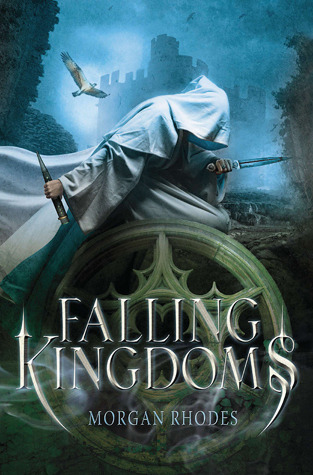
Falling Kingdoms by Morgan Rhodes
Book One of the Falling Kingdoms Series
2 out of 5 stars.
This was a reread for me, and unfortunately my thoughts after reading this a second time were drastically more negative than my experience with Falling Kingdoms the first time around. The world-building was very poorly done, the characters were impossible to connect with and Rhodes very lazily relies on romantic tension anywhere she sees it is possible to do so... at times making some of her characters act out-of-character to do so. For more of my thoughts, I wrote a review on Goodreads that you can check out if you wish.

A Shadow in Summer by Daniel Abraham
Book One of the Long Price Quartet
3 out of 5 stars.
A Shadow in Summer is an adult fantasy novel with a lot of potential. I enjoyed reading it, though I was a little let down with how Abraham used some of the creative concepts he'd come up with in this series... or, more accurately, how he didn't use them. In this series we have these creatures called the "andat" who are essentially concepts that exist within the world which can be captured by people called "poets" who can then control the andat for their ends, often for the good of a city or country. This wasn't explored as much as I would have liked, but I enjoyed the story nonetheless and did continue on with the series later in the month.

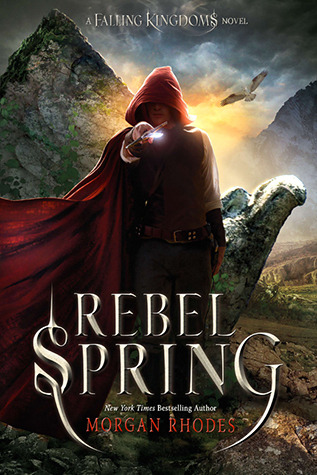
Rebel Spring by Morgan Rhodes
Book Two of the Falling Kingdoms Series
2 out of 5 stars.
The purpose of rereading the first book in this series, Falling Kingdoms, was to refresh my memory so that I could continue onto Rebel Spring since it was very kindly gifted to me last year by a subscriber. Unfortunately I ended up liking this as much as the first book, meaning not very much. The same problems I had with Falling Kingdoms cropped up in Rebel Spring, and as much as I would hope otherwise I don't think this series is going to make any huge improvements. Not sure that I'll be bothering to read any of the later books in the series.

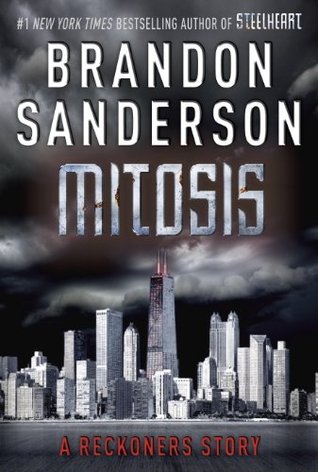
Mitosis by Brandon Sanderson
#1.5 of the Reckoners Trilogy
3 out of 5 stars.
It had been ages since I'd read Steelheart, the first book in this trilogy, and with the impending release of its sequel Firefight, I thought it would be wise to pick up this little short story. It takes place in-between the two novels and, while it isn't necessary to read, was fun and did help me get reacquainted with the characters and the world.


Gender Hurts by Sheila Jeffreys
3 out of 5 stars.
I read a couple of nonfiction books in January, this being the first. Gender Hurts is a radical feminist analysis on transgenderism and its social consequences. It does what it sets out to do, and I did think it was an important contribution to modern day feminism. I did find that Jeffreys was rather insensitive, particularly towards the transgender people she was analyzing, which will likely alienate a lot of readers. Most reviews of this on Goodreads are either 1-star or 5-star, receiving the same treatment as radical feminism overall in present day, which is typically the receiver of much hate - but still staunchly defended by those who agree with its ideals. An enlightening read.

Firefight by Brandon Sanderson
Book Two of the Reckoners Trilogy
3.5 out of 5 stars.
I've been waiting a year to finally get to read this sequel, and it didn't quite live up to what I'd been hoping for. Mostly because at the time I hadn't been getting along with YA books, as evidenced by my feelings towards Falling Kingdoms, but I was hoping Sanderson would be able to pull me out of my YA slump. I still enjoyed this, though I did feel it was a bit predictable and some parts were anticlimactic towards the end. Still a really fun and quick read.
5 out of 5 stars.
More feminist nonfiction! This was my first book by bell hooks, and I have to say it was flawless. I would highly recommend this to anyone interested in feminism or anyone who currently identifies as a feminist but hasn't yet read this. hooks has a very accessible writing style and does an impeccable job of pointing out the flaws in the feminist movement and putting forth ideas of what feminism as a movement should be if it has any hope of success. Lots of genius insight and I know I'll be coming back to this in the future.

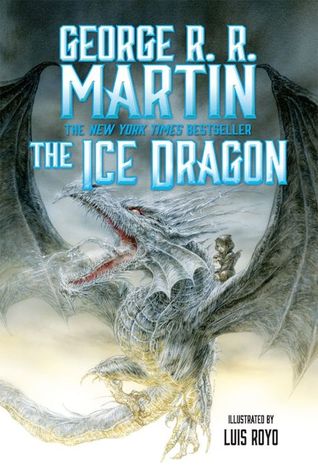
The Ice Dragon by George R.R. Martin
3.5 out of 5 stars.
I picked up this little book from the library and read it in one sitting. There's not much to say about this one - it was a really enchanting "children's" story about a girl and her ice dragon that left me wanting more.


Are Prisons Obsolete? by Angela Y. Davis
4 out of 5 stars.
The last nonfiction book of the month was Are Prisons Obsolete? which is essentially Angela Davis' plea for the abolition of the prison system. I found this to be really enlightening in terms of the history of prisons as well as what they've become over the years and the possible horror of what they could become. I thought Davis made a pretty good argument in this book, though I wish it had been a bit longer.


A Betrayal in Winter by Daniel Abraham
Book Two of the Long Price Quartet
3 out of 5 stars.
The sequel to A Shadow in Summer, A Betrayal in Winter was pretty equal in my mind. I still felt like there was a lot of untapped potential, although Abraham's writing did improve in this second book. I own the last two books in this quartet and do plan on reading them, but I'm not feeling like I need to rush to do so. This is an okay fantasy series, I just hope Abraham can offer something new in the last half.
Night of Cake and Puppets by Laini Taylor
#2.5 of the Daughter of Smoke and Bone Trilogy
4.5 out of 5 stars.
I wasn't originally planning on reading this companion novella, but I felt a need to pick it up when I saw my library had it and boy am I glad that I did! This was a really excellent novella - 100% romance oriented - but it followed two side characters from this trilogy that I really liked and this novella made me love them even more. This is essentially the story of Mik and Zuzana's first date, which is quite a tale. This was a joy to read and, as always, Laini Taylor's writing is impeccable. 


Dreams of Gods & Monsters by Laini Taylor
Book Three of the Daughter of Smoke and Bone Trilogy
4 out of 5 stars.
At last, I have finished the Daughter of Smoke and Bone Trilogy! This wasn't my favorite of the trilogy, but it was a decent end to a pretty great series! I think one of the main downfalls of this final book, and the trilogy as a whole, was how much Laini Taylor was trying to do. There was a lot of jumping between POVs that worked well at times and sometimes put too much strain on the story. There were some aspects of the ending where massive things were revealed that had been previously unknown and it seemed more like Taylor was trying to set up a story for another book/series rather than focusing on ending what she already had. This made the ending a bit convoluted, though I can't say it wasn't somewhat satisfying.

Fairest by Marissa Meyer
#.5 of the Lunar Chronicles
1 out of 5 stars.
Add this to the "I hated this book!" list. I don't feel as if this added anything to the series and it wasn't even remotely entertaining to read. I've enjoyed the other books in the series mostly because they're fun, quick reads... but I found Fairest to be a chore to get through. Maybe readers who actually like Levana's character in the series to begin with will like this, but I personally don't see the appeal. Levana's character was awful, and I don't know if this novella was meant to make me feel sympathetic about her... but you can't make me feel sympathy towards an evil, flat character by showing her being bullied by an even flatter character. None of this was realistic and finishing this was a ridiculously difficult feat. At least I got this from the library instead of paying for it.
Elantris by Brandon Sanderson
3 out of 5 stars.
This definitely read like a debut novel from Sanderson. It has all of the elements I've seen in his other books, but they're much less polished than his newer works. I felt the concept of Elantris was interesting but the novel was so drawn out and hesitantly presented that it was hard to keep interested in the plot or the characters. An enjoyable read, but I would say it pales in comparison to his other works and in the vastness of the fantasy genre, this doesn't really stand out.


Overall it was a pretty productive reading month! 
What was your favorite book read in January?


In the ancient city-state of Gujaareh, peace is the only law. Upon its rooftops and amongst the shadows of its cobbled streets wait the Gatherers - the keepers of this peace. Priests of the dream-goddess, their duty is to harvest the magic of the sleeping mind and use it to heal, soothe . . . and kill those judged corrupt.
But when a conspiracy blooms within Gujaareh's great temple, Ehiru - the most famous of the city's Gatherers - must question everything he knows. Someone, or something, is murdering dreamers in the goddess' name, stalking its prey both in Gujaareh's alleys and the realm of dreams. Ehiru must now protect the woman he was sent to kill - or watch the city be devoured by war and forbidden magic.

The Killing Moon by N.K. Jemisin
Book One of the Dreamblood Duology
Fantasy
4.5 out of 5 stars

The strength of The Killing Moon is its sense of perspective. Every element of this book, from the setting Jemisin has so carefully constructed to the characters populating the story, is offered to the reader through various perspectives. The city of Gujaareh and its culture are not just shown in the light of its inhabitants, but also in the eyes of neighboring cities - both in the present day perspective and how it has been viewed historically. Each character is fleshed out through their interactions with other characters. The development of all of the characters, not just our main characters, has a sense of realism in how they are allowed to be as paradoxical and unpredictable as real people tend to be. 

There is a moral complexity within The Killing Moon that sets it apart from most books I've read. This complexity is all a part of this idea of varied perspectives. Is Ehiru, one of our main characters, a murderer or a merciful priest? There is no clean-cut sense of right or wrong through the eyes of our main characters. Jemisin presents an array of moral choices, all seemingly valid, and leaves it up to the reader to decide where they fall on the spectrum. Even our villain is given a shot at reader sympathy through Jemisin's masterful sense of perspective. 

But this sense of perspective has its downfalls. The beginning is perhaps harder to wade through than some readers may be willing to put up with, though readers of epic fantasy should be accustomed to this sort of thing. As stated before, both the world and the characters of The Killing Moon are fully fleshed out through various perspectives and this takes time. The city of Gujaareh isn't a setting we've seen recycled over and over through the history of the fantasy genre, as many worlds grow from a fascination with medieval Europe. Gujaareh has some Ancient Egyptian inspiration that shines through, but Jemisin pulls inspiration from other historical settings as well. This means the setting may require a little more brainpower to get into. As long as you stick with it, however, this book is incredibly rewarding. Once grounded in this story, it’s hard to put the book down until you've devoured it.

Amidst Jemisin’s gorgeous prose, The Killing Moon perfectly balances the action, political struggles and the religious aspects central throughout. None of these elements overpower the others, if anything they add more depth to one another. Each relates to the main themes stretched throughout - power, corruption, love… all things inextricably tied with the political and religious struggles fueling the plot. The Killing Moon is, in the end, a beautiful yet sad story of humanity. I can definitely see myself picking this up again in the future, as the messages laid throughout are so heartbreakingly true and this is a story that would benefit from more than one reading. If you're looking for a morally complex and diverse fantasy that touches on deep topics we're all familiar with, I'd highly recommend picking up The Killing Moon.
December was the month of dragging myself out of a long reading slump... and I managed to read four novels and one graphic novel! It was a pretty good reading month overall. Onto the books!

The Killing Moon by N.K. Jemisin
Book One of the Dreamblood Duology
4 out of 5 stars.
I'll have a full review up for this book soon, but I must say... The Killing Moon and its sequel were my favorite reads of December, and possibly my favorites for the past few months. Jemisin creates a really interesting world in The Dreamblood Duology, and has filled it with realistic characters and heartbreaking stories. The Killing Moon focuses on themes of power, corruption and love. It was absolutely beautiful. Highly recommend for fantasy readers looking for a new world that doesn't follow the terribly typical Western Medieval template haunting the fantasy genre.
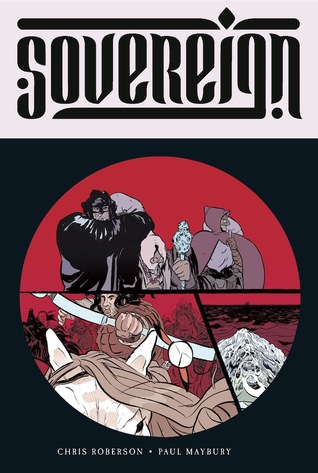
Sovereign, Volume One by Paul Maybury and Chris Roberson
3 out of 5 stars.
I've done a full review of this graphic novel if you'd like to check it out! Sovereign is a fantasy graphic novel that follows multiple characters during the time of a Convergence - an event that strengthens the power of the magic-bearers in this world and the daemons of the Unreal. The art style wasn't my favorite and I had a hard time connecting with the characters as we were forced to jump around too much and the volume itself doesn't offer enough time with the characters to make up for these jumps. I don't think it was that memorable, and I'm not sure I'll continue with future volumes... but it was entertaining enough in the moment.
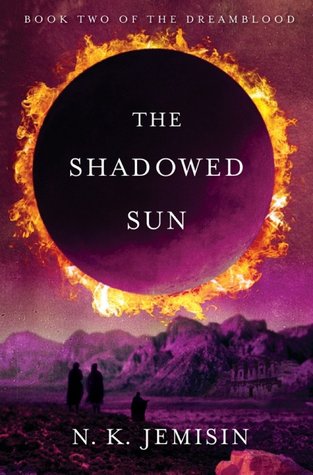
The Shadowed Sun by N.K. Jemisin
Book Two of the Dreamblood Duology
4 out of 5 stars.
Like I said with The Killing Moon, this was one of my favorite books of December. While this has quite a different feel from The Killing Moon - taking place ten years after the events of the first novel and following new characters - I loved it just as much. I'd definitely recommend picking up this second book in the duology if you pick up the first. The experience of reading them is very different, but ultimately very rewarding! I will say though, as a warning (skip this if you are afraid of vague spoilers), there are mentions of sexual assault/rape in this book so if you can't bear to read about it, you may be wise to stay away from this one. I do think it was handled well enough, however. Jemisin isn't clumsy about it at all.
Good Omens by Neil Gaiman and Terry Pratchett
3 out of 5 stars.
Good Omens was one of those books that has been on my shelf for ages because everyone seems to love it. I finally decided to pick it up and was underwhelmed. While the humor was great, it didn't flow well enough with the story and it seemed one of the two, humor or plot, had to be sacrificed every now and again for the other to survive. It seemed to balance both well in the beginning, but everything took an odd turn and it just felt a bit messy for the rest of the novel. I still enjoyed it, but I was a bit let down that I didn't like it as much as everyone else does.

City of Stairs by Robert Jackson Bennett
4 out of 5 stars.
I was highly anticipating City of Stairs after hearing so many trusted folk raving about it. Luckily, unlike with Good Omens, I wasn't disappointed! This standalone fantasy novel does an impeccable job at worldbuilding - I'm not sure how Bennett managed to sneak so much information past me while I was reading. The cast of characters is intriguing, the magic and religion are mysterious, and once it gets going the plot never seems to slow down. I did have some issues with it, and didn't connect with this as much as I did with the previously mentioned Dreamblood Duology, but definitely an entertaining read.


What did you read in December?
An epic fantasy in the tradition of Game of Thrones, Sovereign is set in a world which once knew gods, demons, and magic, and to which all three are returning. New York Times bestseller Chris Roberson joins artist Paul Maybury to tell the story of masked undertakers facing the undead with swords, of civil wars and cultures in collision, and of ancient threats emerging from the ashes of history to menace the future.  

Sovereign Volume 1 by Chris Roberson and Paul Maybury
Collects Sovereign #1-5, plus extras.
Graphic Novel/Fantasy

3 out of 5 stars
At a time of a Convergence - an event that strengthens the power of the magic-bearers in this world and the daemons of the Unreal - the survival of the world is put into question as a society of Horselords begins to realize their tradition of burying their dead will now bring forth an undead army hell-bent on taking over. In Sovereign, we follow a multitude of characters and watch as old traditions seemingly long forgotten come back to the forefront and new magic is birthed from the strength of the Convergence. 

As is typical of collections such as this, Sovereign doesn't quite offer an entire plotline. Sovereign Volume 1's main goal is to introduce the world and its characters, and it does so well enough. While I did enjoy this, I'm not sure it was enough to pull me into this series. The constant changing of POV characters felt a bit distracting in the end, as the 5 installments collected in this graphic novel are not enough to fully connect to any of the characters since we don't have a true focus on any of them. I'm a fan of multiple POVs in epic fantasy, but I'm not quite sure that it works as well in comic form. Even in novel form, it takes extra time to get into a story with multiple POVs, and when you're dealing with comics the time between releases can be a bit jarring.

For avid readers of comics, perhaps this would interest you more. The world that Roberson and Maybury have created is very interesting and has a lot of potential. The potential could have been a bit higher if I'd not found the art style to be so lackluster, as the settings and cultures presented are unique but the art left much to be desired. I would also have liked to have seen the magic systems fleshed out a bit more, as they were the most interesting, but most neglected, aspect of the world Sovereign lets us into. All in all, it was entertaining but not quite enough to make the wait between volumes worth it.


I was provided an eARC through NetGalley in exchange for an honest review.

On her nineteenth birthday, Princess Kelsea Raleigh Glynn, raised in exile, sets out on a perilous journey back to the castle of her birth to ascend her rightful throne. Plain and serious, a girl who loves books and learning, Kelsea bears little resemblance to her mother, the vain and frivolous Queen Elyssa. But though she may be inexperienced and sheltered, Kelsea is not defenseless: Around her neck hangs the Tearling sapphire, a jewel of immense magical power; and accompanying her is the Queen’s Guard, a cadre of brave knights led by the enigmatic and dedicated Lazarus. Kelsea will need them all to survive a cabal of enemies who will use every weapon—from crimson-caped assassins to the darkest blood magic—to prevent her from wearing the crown.
Despite her royal blood, Kelsea feels like nothing so much as an insecure girl, a child called upon to lead a people and a kingdom about which she knows almost nothing. But what she discovers in the capital will change everything, confronting her with horrors she never imagined. An act of singular daring will throw Kelsea’s kingdom into tumult, unleashing the vengeance of the tyrannical ruler of neighboring Mortmesne: the Red Queen, a sorceress possessed of the darkest magic. Now Kelsea will begin to discover whom among the servants, aristocracy, and her own guard she can trust.
But the quest to save her kingdom and meet her destiny has only just begun—a wondrous journey of self-discovery and a trial by fire that will make her a legend…if she can survive.
The Queen of the Tearling by Erika Johansen
Book One of The Queen of the Tearling Trilogy
High Fantasy/Dystopia

2 out of 5 Stars 
The rumored setting of The Queen of the Tearling was intriguing, though perhaps it should have been more of a red flag. Here we have a novel with a typical fantasy setting that takes inspiration from the Middle Ages... and yet it takes place in the future, presumably on Earth. For whatever reason, the British and the Americans made "the Crossing," and sailed to a new "continent" to reestablish society. Our setting is this new society, several generations later, though no advancements seem to have been made. Much knowledge was lost in the journey, and the Tear kingdom has been stalled on any sort of progress. A priest, at one point, comes across a book with a purple cover and remarks upon the color of the dye - apparently, in the many years they've existed on this continent, they've been unable to rediscover how to dye things purple. This gives you an idea of just how hopeless this setting is. Everyone seems to have knowledge of all that was lost in the Crossing, and yet no one seems inclined to try to regain that which was lost no matter how much they long for it.

Within this haphazardly constructed setting, we follow Kelsea Raleigh. Kelsea has been raised in isolation with two assigned guardians. Her mother was once Queen of the Tearling, and decided to send Kelsea away to grow up in safety until she was of age to inherit the throne. At the start of the novel, Kelsea is reclaimed from her secret home by the Queen's Guard and brought back to a kingdom she has never known and is fully expected to immediately become its ruler. Her mother died shortly after sending Kelsea away, and Kelsea's uncle has had the honorable position of Regent in the Queen’s absence. Greedy to keep his power, and gain the true power of a King, her Uncle hopes to kill her before she can ever come into her crown. Her journey to Queendom is filled with assassination attempts, and it seems that the Regent may not be the only one who wants her dead.

Kelsea, as a main character, is interesting. Too often in fiction a female character must be attractive, and female protagonists are quite often driven by romantic plot lines. Kelsea fits neither of those criteria. As a matter of fact, readers are repeatedly reminded that Kelsea is indeed "ugly" and overweight. She is constantly told by men that she isn't physically attractive enough for them. While I respect Johansen for allowing her protagonist to have her story without needing to be beautiful and loved by men, the story isn't all that interesting. Kelsea is a very introspective character, and both her characterization and the plot rely almost entirely on her reacting to injustice. The novel is filled with Kelsea's realization that things in her kingdom are absolutely awful, and her attempts to shoddily patch things up. If I'd been more drawn to her character, perhaps this would have been enough to sustain me. That unfortunately wasn’t the case.

Inevitably, I wasn't entirely satisfied with the characters, the setting was too aggravating to allow me full immersion into the world and the plot wasn't all that riveting. I would definitely say that this was a disappointment. I'd also like to add that this is a strange book to market - it has been labeled as YA by many readers and yet most consider it to be something "other". The coming-of-age elements of the story definitely give it a YA feel, but the content doesn't shy away from sex and violence. Regardless, I don't think everyone will feel as harshly about this as I did. This would probably fit best with readers who aren't as critical of world-building as I am and are looking for a unique female protagonist in a world where we seem to have "beautiful" and "romantically involved" on our checklist of things we must be. 

I received an eARC of The Queen of the Tearling in exchange for an honest review.

On a remote, icy planet, the soldier known as Breq is drawing closer to completing her quest. 
Once, she was the Justice of Toren -- a colossal starship with an artificial intelligence linking thousands of soldiers in the service of the Radch, the empire that conquered the galaxy. 
Now, an act of treachery has ripped it all away, leaving her with one fragile human body, unanswered questions, and a burning desire for vengeance.
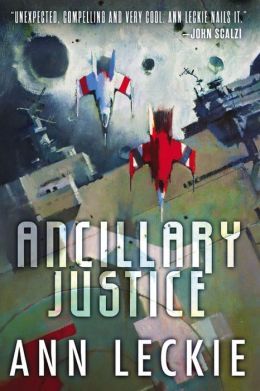
Ancillary Justice by Ann Leckie
Book One of the Imperial Radch Trilogy
Science Fiction/Space Opera

4 out of 5 stars

Ancillary Justice is a difficult book to get into. Had I not gone into this with the knowledge that many reviewers loved the book but still described it as 'confusing,' the beginning might have turned me off. The narrative relies upon a few key concepts, some of which may be hard to digest. With the start of the novel, Leckie has the responsibility of serving these concepts to readers in a timely manner without overwhelming them with exposition. How well she managed to pull this off will depend on the reader. While I found the introduction to the world to be effective, it was challenging to get through. Nonetheless, I wouldn't consider it a flaw as I can't conceive a better method than what Leckie chose. For anyone who is looking for an action-packed, thrilling space opera, this is not what you're looking for. Ancillary Justice is a challenge, on a variety of levels, and that challenge was most of the appeal for me.

The main challenge of Ancillary Justice relates to gender. Our main character, Breq, is an AI (artificial intelligence) who was created within the Radch empire. The Radchaai don't recognize gender. This isn't because there are no longer males and females, but the Radchaai don't put any importance in these differences and assign expectations on people based on their biological sex. With technological advancements allowing for an equal playing field for both sexes, gender is rendered irrelevant. As Ancillary Justice is written in English, and the Radchaai don't distinguish gender, we're left with Breq using a confusing pronoun system. Everyone that Breq meets, whether they are male or female, is referred to with a feminine pronoun. Breq often struggles to judge whether a person is male or female when visiting a gendered society, but even if she knows that someone is a male, she proceeds to use the feminine pronoun. The majority of readers will face some amount of confusion with this, and if you can't accept it early on in the book, the entirety of the narrative will be a struggle. Ancillary Justice is written in first person, with Breq's voice, and the non-discriminatory use of feminine pronouns is not something that goes away.

Breq's existence as an AI makes her difficult to empathize with, in theory. Her narration could be described as robotic and unfeeling, but I think it would be fallacious to say that Breq feels nothing. Even as an AI, Breq does have emotions. In fact, most of the conflicts in Ancillary Justice are caused by Breq's feelings. The narration doesn't need to indulge in dramatic internal monologues outlining every emotion that Breq experiences. We see her emotions through her actions, as her emotions are something that Breq cannot describe or control, or even realize until she's looking back at her actions after all is said and done. She is as much a slave to emotion as a human would be, which is something Leckie reveals slowly and effectively. That is what makes Breq such a compelling character, and is why I didn't struggle to empathize with her in the end.

Leckie's plotting was a bit chaotic. As I mentioned briefly at the start of this review, a good chunk of the beginning was focused on communicating the conceptual world-building - namely the Radchaai's stance on gender and the what/why/how's of the ancillary system. This is to be expected because this is not a standalone novel but a first novel in a trilogy. The beginning is not only the foundation for this book, but those that come after. Nonetheless, the start of Ancillary Justice is one that requires the reader to push through numerous chapters before we have any sort of thrilling plot or coherent world. The middle, on the other hand, is Ancillary Justice's strong point. The majority of the book features alternating chapters from different times - the 'main timeline' being the present where Breq is a lone ancillary seeking revenge, and the 'past timeline' that reveals how Breq was separated from her ship and her other ancillaries. The combination of these timelines does a wonderful job at raising suspense. When the two timelines become one, however, the book's pace slows. The middle is where it peaks, and all after that just seems to sag in comparison. The actual ending of this book is quite muted and opens more doors than it closes, which can be a bit of a disappointment when we spend the entire book leading up to this great act of revenge that Breq is desperately seeking. Regardless, I can't wait to read book two, Ancillary Sword, and see where Leckie takes this story next.
I read seven things this month - four novels and three graphic novels. Onto the wrap-up!


Persepolis: The Story of a Childhood (Persepolis, #1-2) by Marjane Satrapi
4 stars
I recently discovered the wonder that is the graphic novel section of my local library, which remains glorious despite its small selection. There were some graphic novels I'd been interested in, but volume one wasn't available... so I ended up getting the Persepolis duology. These were books I'd been interested in, but never interested enough to actually go out and buy them. With all of the conflict happening in the Middle East right now, it was a good time to pick these up.

Persepolis: The Story of a Return (Persepolis, #3-4) by Marjane Satrapi
4 stars
Both of the Persepolis volumes were fairly equal in my mind. The art left a lot to be desired. You can easily flick through the pages and see that Satrapi uses a very simple art style. I knew what I was getting into when I picked this up, so it wasn't really a problem, but it is worth noting. I didn't feel like I had a full understanding of the political conflict that Satrapi had been a part of, but I suppose as a memoir this is not supposed to be a history textbook. Overall I think these graphic novels combined make up a great coming-of-age story.


The Kiss of Deception by Mary E. Pearson
3 stars
You can read my full review here.
The Kiss of Deception was getting a lot of hype over on Booktube, so naturally I had to pick it up. I was ultimately really let down, as this ended up being much more romance than high fantasy, the latter being what I had hoped for. The mystery that drew a lot of readers in made me feel more annoyed than anything, and I felt cheated on a lot of elements that Pearson introduced but never did anything with. I liked the writing style but was disappointed by the actual story that Pearson decided to tell. Not sure if I'll be continuing with this trilogy, but I wasn't left feeling like I needed to keep reading.

The Way of Kings by Brandon Sanderson
4 stars
Will have a full review soon.
I ended up reading The Way of Kings for the #augustofkings read-along with some Booktube friends. This is now the longest book I've ever read, if we're going to compare it to A Storm of Swords by George R.R. Martin.  The amount of world-building in this book was ridiculous (in a good way). I felt like this could have been much shorter - there were a lot of chapters that felt repetitive and didn't contribute much to the plot, character development or need-to-know world-building. I have a feeling the sequel, Words of Radiance, will be a lot better since it won't have the responsibility of being the foundation for a massive ten-book series.


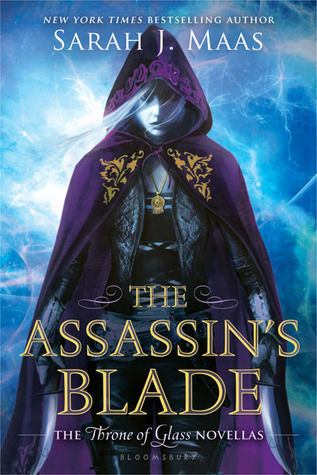
The Assassin's Blade by Sarah J. Maas
3.5 stars
You can read my full review here.
In preparation for the release of Heir of Fire, I knew I had to finally read all of the Throne of Glass novellas. These don't contribute much of anything to the series in terms of plot - everything that happens in the prequel novellas is mentioned in later books and they're not crucial need-to-know events, as is typical with novellas. I really appreciated that The Assassin's Blade had an overarching story, even though it's a collection of five separate novellas, and I thought these novellas were a lot of fun overall.


Of Metal and Wishes by Sarah Fine
3.5 stars
Will have a full review soon.
For anyone looking for diverse YA, Of Metal and Wishes is a good place to start. I've read two books by Sarah Fine before, the first two books in the Guards of the Shadowlands trilogy, and really enjoyed them. Fine has a talent for addressing sensitive topics while maintaining a fast-paced story, and she pulled that off once again in Of Metal and Wishes. While this was a really quick and enjoyable read, the world-building was lacking and the story itself just wasn't that memorable. I respect Fine's attempt at addressing social issues like sexism and racism, and I also must give props to the publisher for resisting whitewashing the cover and keeping it accurate to the story. 

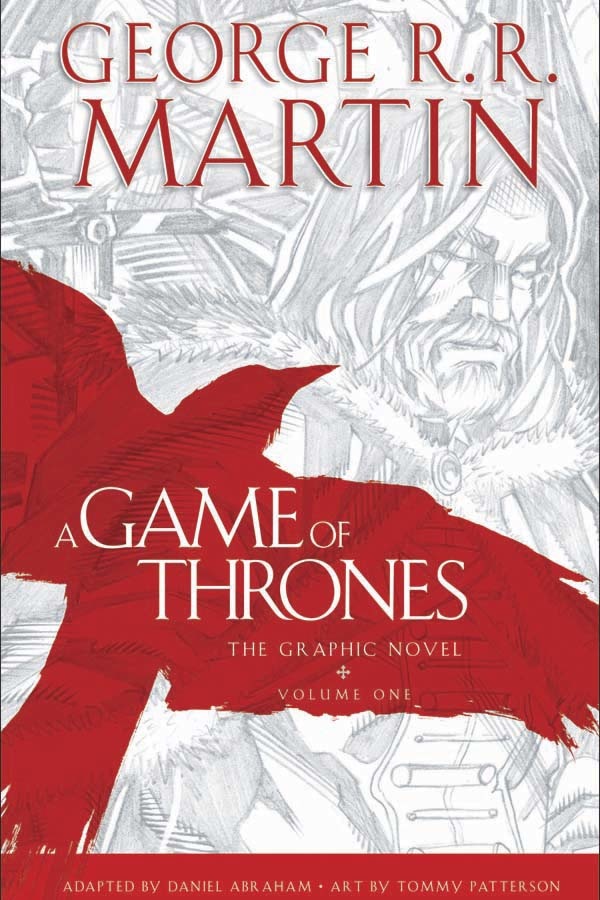
A Game of Thrones: The Graphic Novel, Vol. 1
3 stars
This was the other graphic novel I picked up at the library. I've watched the Game of Thrones TV show and read all of the A Song of Ice and Fire books, so I figured I might as well try out the graphic novels too. The art wasn't my favorite, which was disappointing as that was sort of the point of picking these up. The panels felt really busy most of the time and a lot of the characters didn't look all that different. There were some pages that consisted just of white dudes with long brown or red hair and similar faces. It was still enjoyable and I'll probably pick up some of the other volumes if I see them at the library.


What was your favorite book that you read in August?


A few months ago Bloomsbury held a contest for the Throne of Glass books, in honor of the release of the third book, Heir of Fire. I found out about it a few days before entries were due and took some photos and attempted to photoshop them to look more like the main character Celaena... considering I am definitely not blonde and Celaena definitely is. Here's what I ended up entering;


...and if you watch the Heir of Fire fan trailer, you'll see my image! 
I actually did a post a few months ago about the process of creating my entry, so if you want to see that you can click here.

Thanks to Bloomsbury for hosting such a cool contest, and congrats to the other winners.

Make sure you pick up Heir of Fire by Sarah J. Maas when it's released next week! 


Celaena Sardothien is Adarlan's most feared assassin. As part of the Assassin's Guild, her allegiance is to her master, Arobynn Hamel, yet Celaena listens to no one and trusts only her fellow killer-for-hire, Sam. In these action-packed novellas - together in one edition for the first time - Celaena embarks on five daring missions. They take her from remote islands to hostile deserts, where she fights to liberate slaves and seeks to avenge the tyrannous. But she is acting against Arobynn's orders and could suffer an unimaginable punishment for such treachery. Will Celaena ever be truly free? Explore the dark underworld of this kick-ass heroine to find out.

The Assassin's Blade by Sarah J. Maas
Prequel Novellas 1-5 of the Throne of Glass series
YA/High Fantasy

3.5 out of 5 Stars
Novellas have become the new thing in YA fiction in the past few years.With the torturous waiting period readers are forced to endure between new books in a series, short stories featuring our favorite characters are generally appreciated. The Assassin's Blade, as a collection, sets itself apart from other such novellas. With five novellas in all, originally released individually in e-book form, The Assassin's Blade has an overarching story that takes up as many pages as any other book in the series. Combined, the novellas of The Assassin's Blade make up a novel on its own, while still being able to (mostly) stand on their own as novellas.

While this is a prequel to the Throne of Glass series, it was published after the second book in the series, Crown of Midnight, and it's best to read the series in order of publication. There's certainly nothing wrong with reading this before the other books in the series, but I think some of the events in The Assassin's Blade will make more sense once readers have come to some discoveries about Celaena's character in Crown of Midnight. For readers of the series who weren't the biggest fan of Throne of Glass, I wouldn't recommend picking up The Assassin's Blade. The ending of The Assassin's Blade can be guessed by anyone who has read Throne of Glass, and there isn't much added to the series as this isn't meant to be a compulsory read one needs to pick up to continue on with the series. The novellas are mostly fun adventure stories.

The Assassin's Blade shows the progress Maas has made as a writer. One of the main problems with Throne of Glass is Celaena's characterization. We get told a lot about how Celaena is such an awesome, badass assassin but we don't really see that shown in her actions. The Assassin's Blade almost seems like its entire purpose is fleshing out her character, while telling an action-packed story in the process. For fans of the Throne of Glass series, this is a great read to save for when you're waiting for the next installment in the series to be published... but it's not at all necessary to read. Overall this was an exciting installment and I'll be interested to see if some of the characters from these novellas show up in later books in the series!

In a society steeped in tradition, Princess Lia’s life follows a preordained course. As First Daughter, she is expected to have the revered gift of sight—but she doesn’t—and she knows her parents are perpetrating a sham when they arrange her marriage to secure an alliance with a neighboring kingdom—to a prince she has never met.
On the morning of her wedding, Lia flees to a distant village. She settles into a new life, hopeful when two mysterious and handsome strangers arrive—and unaware that one is the jilted prince and the other an assassin sent to kill her. Deception abounds, and Lia finds herself on the brink of unlocking perilous secrets—even as she finds herself falling in love.

The Kiss of Deception by Mary E. Pearson
First book in The Remnant Chronicles
YA/High Fantasy/Romance


  3 out of 5 stars
The title of The Kiss of Deception felt as much a description of the book's contents as it was a description of my experience reading it. The beginning hints at an interesting world with an intriguing mythology and mystery that is, inevitably, ignored for the sake of putting romance at the forefront. What little we are given of the culture of this world was enough to keep me wanting more, but it didn't pay off in the end. Whatever remnants of the mystery we're given is dedicated to adding flare to the love triangle. How to make a love triangle not seem like every other YA love triangle? Make the two men involved have ambiguous identities and keep readers guessing about who's who! While some readers have found this 'mystery' to be a riveting aspect of the story, I was more annoyed than impressed. Spending more than half a book not knowing which character is which for the sake of an attempt at suspense was not my cup of tea.

The best that The Kiss of Deception had to offer was the writing style. I found myself wanting to highlight certain passages as I think this is a fairly "quotable" and beautifully written story. The writing wasn't perfect - I found it to be lacking in description of the world - but it was my favorite aspect of the story. While the language of this was up to par for me, I wish the contents were equal in value. 

I think The Kiss of Deception is a decent foundation for the rest of the series, but it didn't leave me wanting to continue. After reading through 400+ pages and getting denied anything besides an uncompelling romance and being left with a ridiculous cliffhanger that offers no resolution, I felt like The Kiss of Deception dedicated too much of my time to a meandering story that wasn't worth it in the end. For readers who enjoy romance with a weak fantasy backdrop, this is the book for you. For any reader wanting more than just a fantasy backdrop, I'd say avoid The Kiss of Deception. At least until more books come out in the series, which could improve upon the foundation this provided... but only time will tell.