Latest Posts

Veronica Roth’s Divergent trilogy (Divergent, Insurgent, Allegiant) has captured the hearts and thoughts of millions of readers. In Divergent Thinking, YA authors explore even more of Tris and Tobias’ world, including    • What Divergent’s factions have in common with one of psychology’s most prominent personality models • The biology of fear: where it comes from and how Tris and the other Dauntless are able to overcome it • Full-page maps locating all five faction headquarters and other series landmarks in today’s Chicago, based on clues from the books • Plus a whole lot more, from why we love identity shorthand like factions to Tris’ trouble with honesty to the importance of choice, family, and being brave.With a dozen smart, surprising, mind-expanding essays on all three books in the trilogy, Divergent Thinking provides a companion fit for even the most Erudite Divergent fan.

Divergent Thinking: YA Authors on Veronica Roth's Divergent Trilogy
Standalone Anthology/Companion to the Divergent Trilogy
Non-fiction

4 out of 5 stars
Warning: Divergent Thinking has spoilers for all three novels in the Divergent trilogy.

The Divergent Trilogy, for me, started strong and became progressively weaker. The world-building and the revelations of the final book that revealed how Chicago became what it was were both partially implausible and boring. YA Dystopian novels are great for two reasons - firstly, there tends to be a lot of action and a fast pace. The Divergent trilogy held up this end of the bargain for most of its run. Secondly, the world-building and/or themes allow for a more thought-provoking experience. The trilogy didn't deliver this for me. Divergent Thinking filled in most of what I felt the trilogy lacked, providing insights that allowed a deeper, more speculative look into the series and the Divergent world. For someone left so disillusioned and dissatisfied at the end of the trilogy, this was a perfect book to pick up.

Divergent Thinking contains a dozen essays written by an equal amount of YA authors. Each takes on a topic; from the pros and cons of the faction system to why Dauntless, as a military body, failed in its goals. As with most anthologies, some of the essays are stronger than others. My favorite of the collection was "Fear & The Dauntless Girl" by Blythe Woodston, which pleasantly surprised me. The essay looked at the biology of fear (in an interesting way! I promise it's not like reading a biology textbook) and what factors in Divergent's Chicago groomed its people for violence and rebellion. I found this to be the most insightful of the anthology, while still remaining readable and entertaining.

The main critique I have of Divergent Thinking is that some of the essays became a little repetitive. It didn't seem like there was any correspondence between the contributors, since so many of them wrote about ridiculously similar topics. The factions in particular seem to be a very popular topic, but it got old fast. The factions in Divergent were never anything I found incredibly thought provoking, and I had already made a lot of the connections the authors made in their essays... so these were slightly tedious to get through. The first two essays in the collection are both making comparisons between the factions and personality types. If the essays hadn't been put together, maybe it would have been a little less obvious and a little more bearable.

I think Divergent Thinking has something to offer every Divergent fan, even those of us who were left feeling unsatisfied with the trilogy's conclusion.

I was given a copy of this book by the publisher in exchange for an honest review.
One thousand years after a great conflict known as The Mapmaker’s War, a daughter is born to an ambitious historian and a gifted translator. Secret Riven doesn’t speak until her seventh year but can mysteriously communicate with plants and animals. Unsettled by visions and dreams since childhood, she tries to hide her strangeness, especially from her mercurial father and cold mother. Yet gentle, watchful Secret finds acceptance from Prince Nikolas, her best friend, and Old Woman, who lives in the distant woods.
When Secret is twelve, her mother receives an arcane manuscript to translate from an anonymous owner. Zavet suffers from nightmares and withdraws into herself. Secret sickens with a fever and awakens able to speak an ancient language, one her mother knows as well. Suddenly, Zavet dies. The manuscript is missing, but a cipher has been left for Secret to find.
Years later, Secret becomes a translator’s apprentice for Fewmany, an influential magnate, who has taken an interest in her for reasons she cannot discern. Before Secret learns why, Old Woman confronts Secret with the truth of her destiny—a choice she must make that is tied to an ancient past.
The Chronicle of Secret Riven by Ronlyn Domingue
Second book in The Keeper of Tales Trilogy
Sequel to The Mapmaker's War
Fantasy
 3 out of 5 stars

The Chronicle of Secret Riven is a slightly disconnected sequel to The Mapmaker's War, which I have also reviewed and really enjoyed. This sequel takes place in the same world, but thousands of years after the first book. As such, there are many cultural shifts that have taken place and new characters to be introduced. This book and the following book are set up to be more of a duology, with The Mapmaker's War being a prequel set in the distant past and the final two books following the same character's story. While The Mapmaker's War easily stands on it's own, The Chronicle of Secret Riven cannot stand apart from its coming sequel without feeling incomplete. You do not need to read The Mapmaker's War to read The Chronicle of Secret Riven, but I would recommend that you do. It adds a layer to the story that those who haven't read the first book will miss.

A lot of what I loved about The Mapmaker's War was missing in The Chronicle of Secret Riven. Whereas I highly enjoyed the unique writing style - the fact that the first book was written in second person narration - this second installment went for a more conventional style. The fact that the second installment not only follows different characters in a completely changed future-world, and the vast change in writing style, creates a massive disconnect between the two books. While Domingue still showcases her ability to create enthralling characters for a massively character-driven fantasy story, that felt like the only element of the story that remained similar to its predecessor.

Our main character, Secret, was an interesting one to follow. In this installment, we see her grow from a mute child, discriminated against for her disability and for her race (she is a person of color), to a young woman applying to University. This gives the book a more Young Adult feel. Even though I loved Secret, I felt we saw too much of her. This book is twice as long as its predecessor, and unnecessarily so. We recount every year of her life in too much detail, which developed more of her characterization than any the plot. While Domingue's books are driven by the characters more-so than the story, we could have known just as much about Secret in less words rather than recounting every situation in which she is bullied by other kids or her mother gets angry at her (which happens a lot).

The development of the world that we originally see in The Mapmaker's War was intriguing. There are interlude chapters, short and written in a style more reminiscent on the first book, that lay out the setting clearly for the reader. While I found the setting to be interesting, and the additions of new technologies to add a different element unseen in the first novel, these interlude chapters felt unneeded. I ended up skimming them for the most part, because I felt the visuals and information provided were already sufficiently supplied in the normal chapters. The interlude chapters were more confusing than helpful, since I was never quite sure why they were needed.

The Chronicle of Secret Riven, in the end, could have used significant trimming and perhaps stopped a little further into Secret's tale. The end of the book didn't feel like an end at all, and nothing was really accomplished aside from Secret growing up and coming into her powers. Mysteries that were alluded to remain unsolved. The story remains unfinished, despite the fact that it clocks in at 400 pages and has more than enough space to wrap up more plot-lines than it attempted to.

I am still looking forward to the next book, since the mysteries hinted at in this installment were quite interesting and I would love to see where this goes... I just wish this book had provided more.


I was provided a review copy by the publisher in exchange for an honest review.
                Monday Missions was created over on Youtube by A Thousand Lives of Daisy as a way to make reading goals for the week. I’ve always thought these were preferable to monthly TBRs (which honestly, who really ever accomplishes reading everything they planned to read in a month?) so I figured I’d try it out this week.

                I’ve got a busy work week coming up, so I'm not sure how much I'll be able to read, but I'm hoping to finish up 3 books! So my goal this week is to...

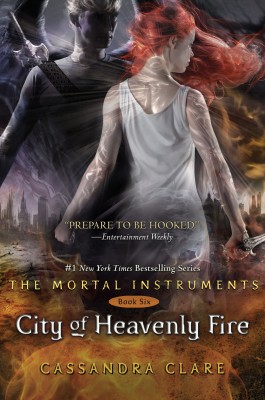
Finish The Mortal Instruments Series! 
(Books 4-6)

              I had read City of Bones ages ago and vowed that I would never finish the series, but the hype surrounding tomorrow’s release of the final installment, City of Heavenly Fire, has me feeling like I need to read them just to be ‘in the know’. Last week I managed to read the second and third book, City of Ashes and City of Glass. I’m now reading the fourth book, City of Fallen Angels, and will hopefully get around to City of Lost Souls and maybe City of Heavenly Fire? This series is my main priority for this week, reading wise, and If I actually manage to finish the series I will feel uber accomplished. The main reason I want to have it finished this week is because of spoilers. The internet is rubbish at keeping secrets about the final books in series. The book isn't even out yet and there are already spoilers! This isn’t my favorite series in the world, but it’ll be nice to have it finished and to know what the heck everyone is going on about.

If I do manage to finish these books before the week ends, I have no idea what I'll pick up afterwards. Hopefully something from my bookshelf! (My TBR pile may be small compared to some, but having all of these unread books makes me anxious!)


What will you be reading this week?
This will be the map of your heart, old woman. In an ancient time, in a faraway land, a young woman named Aoife is allowed a rare apprenticeship to become her kingdom’s mapmaker, tasked with charting the entire domain. Traveling beyond its borders, she finds a secretive people who live in peace, among great wealth. They claim to protect a mythic treasure, one connected to the creation of the world. When Aoife reports their existence to her kingdom, the community is targeted as a threat. Attempting to warn them of imminent danger, Aoife is exiled for treason and finds refuge among the very people who had been declared her enemy. With them, she begins a new life surrounded by kindness, equality, and cooperation. But within herself, Aoife has no peace. She cannot share the grief she feels for the home and children she left behind. She cannot bear the warrior scars of the man she comes to love. And when she gives birth to their gifted daughter, Aoife cannot avoid what the child forces her to confront about her past and its truth. On this most important of journeys, there is no map to guide her. In this tale—her autobiography— Aoife reveals her pain and joy, and ultimately her transformation. 
The Mapmaker's War by Ronlyn Domingue
First book in The Keeper of Tales Trilogy
Fantasy
 4.5 out of 5 stars
Rounded up to 5 on Goodreads. 

There are books that take risks and pay for it with polarizing reviews. The Mapmaker’s War is one of those books, but luckily, I was one of those who really enjoyed it. Set up as an autobiography as a woman living in an ancient kingdom, we follow the life of an aspiring mapmaker and the war that comes about as a result of her ambitions. This review will mostly be concerned with the elements of this book that I considered risky, so that you can go into this with a better guess of whether or not this book is for you. 

Seeing as this is meant to be a memoir of sorts, The Mapmaker’s War is character-driven rather than plot-driven. The ending it more of a fizzling out than a big bang, since most people’s lives tend to calm down towards the end… especially if they have the time to be settling down and writing a book about their life. The conflict is largely internal, and the ending reveals no big twist or battle scene. Anyone who goes into this thinking they need to trudge through the first half to reach some imagined action-packed second half are making a mistake.

Being written in an unconventional style, namely the fact that it’s written in second person rather than the more commonly used first or third person, this may be hard to get into for some. This writing style made for an intimate reading experience in my case. I know readers used to a more common style will be put off, and if you can’t get used to it by the third chapter, you’ve probably got very little hope of adjusting to the book.

Gender, specifically what it means to be a woman, is a big theme in this book. Domingue seems to manage a feminist flavor in all of her books (There is one I’ve yet to read, but even the synopsis reveals the feminist spin), and The Mapmaker’s War in particular deals with some sensitive topics, i.e. reproductive rights. Those interested in either feminism or gender studies will probably get more out of what this novel has to offer.

The characterization in The Mapmaker’s War reflects the story as a whole. This is a mix of history and mythology, of ‘reality’ and fairytales. This is true of the characters as well, in a way. Our cast of characters contains individuals that are archetypal but real. While they are inspired by archetypes, they don’t come off as cardboard cutouts at any point in the story.

Overall, I loved this book and couldn't put it down. Would recommend to those willing to try something new!

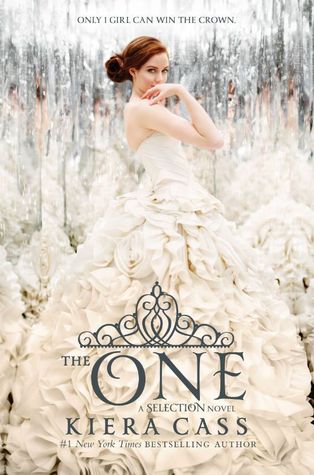
(Summary may contain spoilers if you haven't read the earlier books in the trilogy) The Selection changed America Singer's life in ways she never could have imagined. Since she entered the competition to become the next princess of IllĂ©a, America has struggled with her feelings for her first love, Aspen--and her growing attraction to Prince Maxon. Now she's made her choice . . . and she's prepared to fight for the future she wants.

The One by Kiera Cass
Third Book in The Selection Trilogy
YA/Romance/'Dystopia'

 1.5 out of 5 stars
he Selection Trilogy was never my favorite. They work well as quick, light-hearted (and weirdly addictive) reads, but don't offer much more than that. This is one of those trilogies that should have been a standalone. There isn't enough story to warrant three separate books! If you're reading this review, however, you've probably already invested in this series. I definitely recommend you read this if you've read the first two books, The Selection and The Elite, even if I didn't enjoy this final installment. It's worth at least knowing the conclusion, even if it is ridiculously predictable.

The majority of the issues I had with this book are identical to those I had with the first two books. While these books are labeled as dystopia, the dystopian elements are superficial in their influence on the story. We're given a caste system and some people who don't like it and boom! Dystopian qualification obtained. The world-building was lacking in favor of the petty conflicts faced by America and her two love interests, which may be fine for some, but left me unsatisfied. The relationships between the characters were equally as shallow as the world-building, but were given much more attention in all of the books. 

While I found the first two books to be somewhat fun, The One didn't live up to that. After awhile, the conflict caused by characters refusing to communicate properly over the span of multiple books, the laziness shown towards the world-building and towards the plot points developed surrounding the 'rebels' (which is not at all resolved, at least not in a satisfying or plausible way), and the out-of-character behavior shown by some of the main characters for the sake of adding drama to the story... The One was more aggravating than enjoyable.

Again, I still recommend this to those invested in the series, as a lot of readers really enjoyed this last installment. I just wasn't one of them.


I managed to read 6 books in April. I'm hoping to read more in May, so I've set a few goals for this upcoming month... but first, let's get into what I read last month!

Saga Volume One by Brian K. Vaughn, illustrated by Fiona Staples
5 stars
Saga has gotten a lot of hype on Booktube lately, and for good reason. This first volume was wildly entertaining and the illustrations (it's a graphic novel, FYI) were phenomenal. I wanted to reread this as soon as I had finished, and I can't say I feel that way about a lot of books. Recommended for adult readers who enjoy fun fantasy/sci-fi. Emphasis on the adult, because this series has a lot of gore and sex and the illustrations do not shy away from showing that.


Divergent Thinking by Various Authors
4 stars
I was sent Divergent Thinking for review by BenBella Books, and will have a full review up soon. Divergent Thinking is a collection of essays from a dozen YA authors addressing various topics in the Divergent series, from the factions to the biology of fear. As with all anthologies, some parts were stronger than others. Recommended for fans of the Divergent series who are looking for more insight into some of the ideas the series encapsulates.


Saga Volume Two by Brian K. Vaughn, illustrated by Fiona Staples
5 stars
After reading volume one, I had to get my hands on volume two. While I liked volume two slightly less than volume one, it still warranted a five star rating. Seriously guys, PICK UP THIS SERIES. 


5 Stars
With the release of the final book in this trilogy, Dreams of Gods and Monsters, being released this month, I felt a need to play catch up. I finally got around to reading this and I'm so glad that I did. I had given the first book in the series 4 stars, and had some serious issues with the ending... but none of those issues cropped up in this second installment. And it made the parts of the first book that I really didn't enjoy feel necessary. Taylor's writing was as dark and beautiful as ever, and while I didn't end up reading the third book this month, I'm hoping to read it soon. I'll be sad when this series is over, which is something I didn't expect after being slightly disappointed with the first book. 
4 stars
I've felt a need to read more feminist works this month, and this was the only book that I managed to finish. (I did get pretty far into others, but didn't end up finishing them in April.) This was recommended to me years ago and I finally got my hands on a copy and read it immediately. Because it was published around 10 years ago, it does feel quite dated and some of the references it makes feel irrelevant at this point in time (Is Girls Gone Wild still a thing? Because that was basically a whole chapter). I'd also wished it addressed more topics than it managed to. I do think that this is a good book for anyone who is looking to read more feminist works but are not familiar with a lot of feminist terms. Some feminist books read as very academic and inaccessible, but this was an easy read.
Furies of Calderon by Jim Butcher
4.5 stars (rounded to 5 on Goodreads)
I'd been gifted Furies of Calderon for my birthday by Regan from PeruseProject, who has raved about this series for as long as I can remember. Seeing as I've yet to read anything she's recommended and not thoroughly enjoy it, I had to start this series. And it was glaring at me from my bookshelf. Ultimately I thought this was an incredible start to what I imagine is a fantastic series, and I'm really looking forward to reading the next books in the series. I would have had the second book finished by the end of April if I wasn't still, to this day, on hold for it at my local library.*sigh* Regardless, the world-building in this book is great, the characters set the stage for the developments of the next five books, and I thought the pacing was mostly well done - which a lot of people seem to disagree with for some reason. It didn't feel as long as it was when I was reading it, so if you're afraid of this book because of the size... just give it a go! 

I'm not usually one to make TBR lists, but this month I wanted to make some goals for myself...

May TBR

Dune by Frank Herbert
I'm currently reading Dune and will definitely be finishing it this month. Dune is a sci-fi classic that laid the foundations for later sci-fi works, so as someone who is trying to get into more adult sci-fi... this is a perfect place to start. I've really enjoyed what I've read so far! 


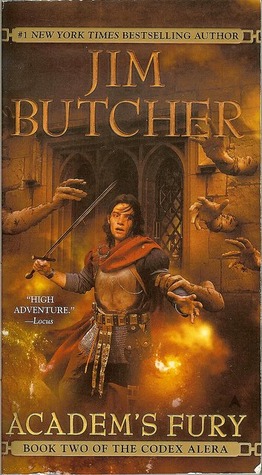
Academ's Fury by Jim Butcher
I'll be reading this whenever I get my hands on it. I'm 7th in line for it at the library, but if I don't end up with it soon I may just have to buy it... I'd also like to read the third book, Cursor's Fury, if I can get a hold of that this month too. My plan is to read as much as I can of the series ASAP. I'm not allowed to start any other big fantasy series (mainly Mistborn and The Kingkiller Chronicle) until I've finished the Codex Alera series. 


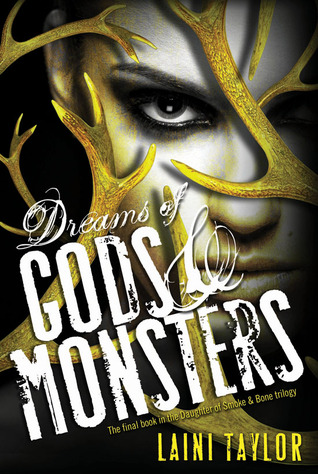
In the spirit of needing to finish series that I've started, I'm hoping to read DoGaM this month and have the Daughter of Smoke and Bone trilogy finished. Not to mention the fact that it's much easier to evade spoilers if you read a book closer to its release date... Spoilers are a ticking time bomb and I'd like to avoid them at all costs.


Those are all of my set-in-stone plans for May! Let me know if you guys have read any of these books, or what you're planning on reading in May.

Since birth, Nyx has been betrothed to the evil ruler of her kingdom-all because of a foolish bargain struck by her father. And since birth, she has been in training to kill him.With no choice but to fulfill her duty, Nyx resents her family for never trying to save her and hates herself for wanting to escape her fate. Still, on her seventeenth birthday, Nyx abandons everything she's ever known to marry the all-powerful, immortal Ignifex. Her plan? Seduce him, destroy his enchanted castle, and break the nine-hundred-year-old curse he put on her people. But Ignifex is not at all what Nyx expected. The strangely charming lord beguiles her, and his castle-a shifting maze of magical rooms-enthralls her.As Nyx searches for a way to free her homeland by uncovering Ignifex's secrets, she finds herself unwillingly drawn to him. Even if she could bring herself to love her sworn enemy, how can she refuse her duty to kill him? With time running out, Nyx must decide what is more important: the future of her kingdom, or the man she was never supposed to love.
Cruel Beauty by Rosamund Hodge
Standalone novel
YA/Retelling/Fantasy

 4 out of 5 stars
Cruel Beauty is one of the books that are incredibly hard to thoroughly review without being spoilery, so I'll have to leave some points alone for the purpose of not ruining the book for those who haven't read it.

Cruel Beauty takes place in the most unique world that I've read in YA fiction, and possibly in fiction in general. This is both a strength and a weakness for the story, and the way it will be received depends entirely upon the reader. A lot of readers go into this expecting a Beauty and the Beast retelling, and there is much more to it than that. The additional inspiration for the plot and the world-building is drawn from numerous sources and, as such, may be confusing or jarring for some readers. While the aspects of retelling are not confusing (where we reference Beauty and the Beast, Rumpelstiltskin, Bluebeard...) as you don't need to understand or recognize the source to know what's going on, the world-building is largely built on information that is not common knowledge and may be hard to digest for readers unfamiliar with the source material. 

The world and magic system is built upon two major things: Greek mythology and Hermeticism. The world itself seems to be an alternate version of a Greco-Roman world, and works as if hundreds of years ago, something happened that made it differ from what we would see today. This world is cut off from the rest of the Earth and isolated, and the gods of Greek mythology are part of the traditional belief system. While I'm not the most knowledgeable of Greek mythology, I did think Hodge did a decent job of explaining what everything meant while incorporating it into the story. I'm not sure I think the handling of Hermeticism was as good, however. I'm familiar with Hermeticism and the Hermetic principles as they stand in our reality, and Hodge uses Hermeticism as a magical system. There are a lot of principles just outright said but not explained to the reader, and while I understood what was going on, I think it might be more than some readers can handle. A lot of readers seem to not know that Hermeticism is something that actually exists, and those who are unfamiliar with it may be confused by it. I would say that readers will get the most out of Cruel Beauty if they have some understanding of Hermeticism or Greek mythology, otherwise the amount of world-building may seem daunting and confusing. 

The plot drifted enough from the original story that I didn't feel like everything was completely predictable, as I've found with some retellings. It wasn't entirely unpredictable however. There was what I think was an intended plot twist that I saw coming in the beginning, but as it was something that I was hoping would happen, I didn't mind the predictability. (It was a bit of a relief to see I was right, actually.) The best part of Cruel Beauty, for me, was the romance. The chemistry between Nyx and her love interest was to die for. I think some readers may be troubled by the romance in the beginning, for reasons I cannot explain because of spoilers, but all I will say is hang in there before giving up on it.

In the end, Cruel Beauty is dark, strange and beautiful. I would recommend it to those willing to spend a bit of time wading into a bizarre other world, and ready to read through lots of romancy bits.