Latest Posts

Showing posts with label Series. Show all posts
On a remote, icy planet, the soldier known as Breq is drawing closer to completing her quest. 
Once, she was the Justice of Toren -- a colossal starship with an artificial intelligence linking thousands of soldiers in the service of the Radch, the empire that conquered the galaxy. 
Now, an act of treachery has ripped it all away, leaving her with one fragile human body, unanswered questions, and a burning desire for vengeance.
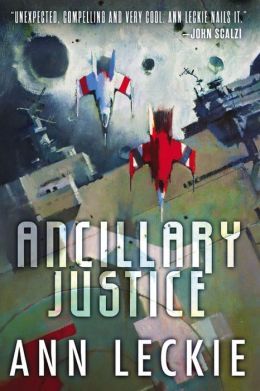
Ancillary Justice by Ann Leckie
Book One of the Imperial Radch Trilogy
Science Fiction/Space Opera

4 out of 5 stars

Ancillary Justice is a difficult book to get into. Had I not gone into this with the knowledge that many reviewers loved the book but still described it as 'confusing,' the beginning might have turned me off. The narrative relies upon a few key concepts, some of which may be hard to digest. With the start of the novel, Leckie has the responsibility of serving these concepts to readers in a timely manner without overwhelming them with exposition. How well she managed to pull this off will depend on the reader. While I found the introduction to the world to be effective, it was challenging to get through. Nonetheless, I wouldn't consider it a flaw as I can't conceive a better method than what Leckie chose. For anyone who is looking for an action-packed, thrilling space opera, this is not what you're looking for. Ancillary Justice is a challenge, on a variety of levels, and that challenge was most of the appeal for me.

The main challenge of Ancillary Justice relates to gender. Our main character, Breq, is an AI (artificial intelligence) who was created within the Radch empire. The Radchaai don't recognize gender. This isn't because there are no longer males and females, but the Radchaai don't put any importance in these differences and assign expectations on people based on their biological sex. With technological advancements allowing for an equal playing field for both sexes, gender is rendered irrelevant. As Ancillary Justice is written in English, and the Radchaai don't distinguish gender, we're left with Breq using a confusing pronoun system. Everyone that Breq meets, whether they are male or female, is referred to with a feminine pronoun. Breq often struggles to judge whether a person is male or female when visiting a gendered society, but even if she knows that someone is a male, she proceeds to use the feminine pronoun. The majority of readers will face some amount of confusion with this, and if you can't accept it early on in the book, the entirety of the narrative will be a struggle. Ancillary Justice is written in first person, with Breq's voice, and the non-discriminatory use of feminine pronouns is not something that goes away.

Breq's existence as an AI makes her difficult to empathize with, in theory. Her narration could be described as robotic and unfeeling, but I think it would be fallacious to say that Breq feels nothing. Even as an AI, Breq does have emotions. In fact, most of the conflicts in Ancillary Justice are caused by Breq's feelings. The narration doesn't need to indulge in dramatic internal monologues outlining every emotion that Breq experiences. We see her emotions through her actions, as her emotions are something that Breq cannot describe or control, or even realize until she's looking back at her actions after all is said and done. She is as much a slave to emotion as a human would be, which is something Leckie reveals slowly and effectively. That is what makes Breq such a compelling character, and is why I didn't struggle to empathize with her in the end.

Leckie's plotting was a bit chaotic. As I mentioned briefly at the start of this review, a good chunk of the beginning was focused on communicating the conceptual world-building - namely the Radchaai's stance on gender and the what/why/how's of the ancillary system. This is to be expected because this is not a standalone novel but a first novel in a trilogy. The beginning is not only the foundation for this book, but those that come after. Nonetheless, the start of Ancillary Justice is one that requires the reader to push through numerous chapters before we have any sort of thrilling plot or coherent world. The middle, on the other hand, is Ancillary Justice's strong point. The majority of the book features alternating chapters from different times - the 'main timeline' being the present where Breq is a lone ancillary seeking revenge, and the 'past timeline' that reveals how Breq was separated from her ship and her other ancillaries. The combination of these timelines does a wonderful job at raising suspense. When the two timelines become one, however, the book's pace slows. The middle is where it peaks, and all after that just seems to sag in comparison. The actual ending of this book is quite muted and opens more doors than it closes, which can be a bit of a disappointment when we spend the entire book leading up to this great act of revenge that Breq is desperately seeking. Regardless, I can't wait to read book two, Ancillary Sword, and see where Leckie takes this story next.
In a society steeped in tradition, Princess Lia’s life follows a preordained course. As First Daughter, she is expected to have the revered gift of sight—but she doesn’t—and she knows her parents are perpetrating a sham when they arrange her marriage to secure an alliance with a neighboring kingdom—to a prince she has never met.
On the morning of her wedding, Lia flees to a distant village. She settles into a new life, hopeful when two mysterious and handsome strangers arrive—and unaware that one is the jilted prince and the other an assassin sent to kill her. Deception abounds, and Lia finds herself on the brink of unlocking perilous secrets—even as she finds herself falling in love.

The Kiss of Deception by Mary E. Pearson
First book in The Remnant Chronicles
YA/High Fantasy/Romance


  3 out of 5 stars
The title of The Kiss of Deception felt as much a description of the book's contents as it was a description of my experience reading it. The beginning hints at an interesting world with an intriguing mythology and mystery that is, inevitably, ignored for the sake of putting romance at the forefront. What little we are given of the culture of this world was enough to keep me wanting more, but it didn't pay off in the end. Whatever remnants of the mystery we're given is dedicated to adding flare to the love triangle. How to make a love triangle not seem like every other YA love triangle? Make the two men involved have ambiguous identities and keep readers guessing about who's who! While some readers have found this 'mystery' to be a riveting aspect of the story, I was more annoyed than impressed. Spending more than half a book not knowing which character is which for the sake of an attempt at suspense was not my cup of tea.

The best that The Kiss of Deception had to offer was the writing style. I found myself wanting to highlight certain passages as I think this is a fairly "quotable" and beautifully written story. The writing wasn't perfect - I found it to be lacking in description of the world - but it was my favorite aspect of the story. While the language of this was up to par for me, I wish the contents were equal in value. 

I think The Kiss of Deception is a decent foundation for the rest of the series, but it didn't leave me wanting to continue. After reading through 400+ pages and getting denied anything besides an uncompelling romance and being left with a ridiculous cliffhanger that offers no resolution, I felt like The Kiss of Deception dedicated too much of my time to a meandering story that wasn't worth it in the end. For readers who enjoy romance with a weak fantasy backdrop, this is the book for you. For any reader wanting more than just a fantasy backdrop, I'd say avoid The Kiss of Deception. At least until more books come out in the series, which could improve upon the foundation this provided... but only time will tell.
Edinburgh, 1844. Beautiful Aileana Kameron only looks the part of an aristocratic young lady. In fact, she's spent the year since her mother died developing her ability to sense the presence of Sithichean, a faery race bent on slaughtering humans. She has a secret mission: to destroy the faery who murdered her mother. But when she learns she's a Falconer, the last in a line of female warriors and the sole hope of preventing a powerful faery population from massacring all of humanity, her quest for revenge gets a whole lot more complicated. The first volume of a trilogy from an exciting new voice in young adult fantasy, this electrifying thriller blends romance and action with steampunk technology and Scottish lore in a deliciously addictive read.

The Falconer by Elizabeth May
First book in the Falconer Series
YA/Paranormal/Historical Fiction/Steampunk

2.5 out of 5 stars
If books were puzzles, The Falconer would be a puzzle made up of pieces borrowed from other puzzles that somehow manage to fit together. While this book isn't necessarily part of genres that I'm an avid reader of - I much prefer high fantasy to the paranormal, and I can't say I read a lot of steampunk - this still managed to feel like something I'd already read before. This is a rather subjective complaint, so I will say that if you haven't read stories like this in the past, you may still enjoy it. There are certainly many readers who have. May allows us to see faeries in a negative light - as deadly creatures, rather than sweet little critters or politicking human-like beings. This does offer a bit of originality that some readers will appreciate.

Aileana, the main character of The Falconer, was a rough character to follow. The Falconer is written in first person POV, and we see everything through Aileana's eyes. Her character is defined by her rage, a trait sparked by the murder of her mother. Before the death of her mother, she describes herself as a pretty average Victorian woman. Her rage permeates the narrative at an annoying rate. We're bombarded with her constant need to murder. Aileana could be attending a breakfast and suddenly, while sipping her tea, become overcome with a need to slaughter faeries. It gets old quickly. The only other trait she really reveals to the reader is her inventiveness - she is very technologically savvy and invents lots of gadgets that she typically uses to aid her vengeful slaughter of the faeries. Unfortunately, her skill seems out of place and unbelievable. Within the context of the world she is living in, it's very unlikely that she would have the supplies to practice her hobby as she does. The creation of any kind of tech, whether it be a new gun or a new locomotive, is portrayed as easy and not at all time-consuming. Planning on going on a murder spree in the afternoon? No problem. Aileana can create a whole new arsenal of weapons the morning of. There were several aspects of this story that were too demanding on the reader to suspend their disbelief, and Aileana's characterization was one of them.

The other characters were archetypal but for the most part entertaining. We have a pixie that lives in Aileana's closet and provides some lighter, funnier dialogue to keep the story from getting too dark. There's a faerie love interest that manages to fit the bill of brooding, beautiful supernatural lover that we see so often in paranormal romance type books... but he's not insufferable. And while the premise of the book sounds mature, The Falconer is actually pretty tame. This could actually fit a younger audience, which leads me to reiterate that this book will be best for those new to this kind of story.

My final thoughts are in regards to the plot of The Falconer. May seemed to struggle with raising the stakes. I felt a distinct sense of apathy when reading this, and didn't generally feel like there was any reason to care about where things were going. Problems that Aileana kept worrying over didn't seem like they were actual problems. There wasn't the feeling that something bad might genuinely happen. The ending of The Falconer is also poorly done - leaving us with a ridiculous cliffhanger. It's as if the author got up mid-paragraph during the climax of the novel to go for a bathroom break and never came back. There is absolutely no resolution, and just as the action starts up, the book ends. While a good cliffhanger can leave readers antsy for the next installment in the series, this just left me unsatisfied and annoyed.

And again, while my review was critical, I think many readers will really enjoy this. The foundation The Falconer lays down for its sequels is interesting, and perhaps the following books will succeed where this one failed.


Not every fairytale has a happy ending. This is the story of a princess who became a villain. As Princess of Wonderland Palace and the future Queen of Hearts, Dinah’s days are an endless monotony of tea, tarts, and a stream of vicious humiliations at the hands of her father, the King of Hearts. The only highlight of her days is visiting Wardley, her childhood best friend, the future Knave of Hearts — and the love of her life.When an enchanting stranger arrives at the Palace, Dinah watches as everything she’s ever wanted threatens to crumble. As her coronation date approaches, a series of suspicious and bloody events suggests that something sinister stirs in the whimsical halls of Wonderland. It’s up to Dinah to unravel the mysteries that lurk both inside and under the Palace before she loses her own head to a clever and faceless foe.
Queen of Hearts by Colleen Oakes
First book in a trilogy (?)
Young Adult/Retelling/Fantasy 

 2 out of 5 stars

Queen of Hearts is an Alice in Wonderland retelling that feels very distant from the original source material. Alice in Wonderland is a delightful and nonsensical read, while Queen of Hearts is incredibly dark. It's also strange to see the Queen of Hearts given back-story, because she was a ridiculous character in the original text. I love stories that flesh out villians (like Wicked did for the Wizard of Oz's villain, the Wicked Witch) but I think the Queen of Hearts is not the best villain to receive this kind of attention. Oakes did do a decent job of pulling it off though, despite my reluctance in believing that it could be done.

I believe this is meant to be the first book in a trilogy, and unfortunately I felt that this is one of those series that should have been a standalone. Queen of Hearts is around 200 pages, so it's not very long in itself, and the novel stops just when it starts getting exciting. There wasn't enough story in this installment, in my opinion, to warrant a single novel. I also felt that the writing was excessive at times, with description in particular, so a lot of those 200 or so pages felt like they had a lot of 'filler' material.

Dinah, our main character, I unfortunately didn't like. I felt that there was this massive attempt by the author to make me like her, but it didn't work. The King, Dinah's father, is also purely evil which is always boring. The King had no depth and seemed to only exist to make Dinah miserable and force readers to pity her. It felt contrived, so it didn't make me feel very bad for Dinah at all because it felt unrealistic. Dinah herself is a rather mean character, and while she becomes idealistically nicer throughout the book, I wasn't a fan of her. She felt rather villainous to begin with, so the idea that she is some innocent princess who becomes a villainous queen feels false.

The other characters borrowed from the original Alice in Wonderland include the Mad Hatter, who is Dinah's insane younger brother. The Cheshire Cat, who's actually a man, a very powerful and menacing man, who is rumored to be able to shape-shift into a cat. The White Rabbit, who serves as Dinah's tutor and mentor. I was slightly uncomfortable with the way that all of the characters seem to be in the royal family or involved in the royal affairs, and I felt like the most interesting characters got the least amount of attention in the plot.

The world-building was probably my favorite aspect of Queen of Hearts. From the ever-changing constellations in the Wonderland night sky to the menacing and enigmatic Black Towers that begin to haunt Dinah's dreams. It definitely retains the ridiculousness of the world-building from Alice in Wonderland. Snow is pink. Why? Because it's Wonderland.

Ultimately this was an interesting concept that I felt could have been executed better.

I was provided an eARC in exchange for an honest review.

The Diviners by Libba Bray
Book 1 of the Diviners series
YA/Historical Fiction/Paranormal/Mystery
Summary:
Evie O'Neill has been exiled from her boring old hometown and shipped off to the bustling streets of New York City--and she is pos-i-toot-ly thrilled. New York is the city of speakeasies, shopping, and movie palaces! Soon enough, Evie is running with glamorous Ziegfield girls and rakish pickpockets. The only catch is Evie has to live with her Uncle Will, curator of The Museum of American Folklore, Superstition, and the Occult--also known as "The Museum of the Creepy Crawlies."   
When a rash of occult-based murders comes to light, Evie and her uncle are right in the thick of the investigation. And through it all, Evie has a secret: a mysterious power that could help catch the killer--if he doesn't catch her first.

 On Goodreads | On Amazon | On Book Depository

5 out of 5 Stars 

The Diviners was a unique reading experience. I've been reading quite a lot of painfully formulaic YA books lately, and this was the exact opposite. This was intricately plotted, original in its structure and filled with a cast of realistic and likable characters. Reading The Diviners was like watching one long film that kept me in its grip for days and days. When I finished, I was exhausted, relieved and sad that the experience had ended.

I'm convinced that Libba Bray has a time machine and spends her nights in NYC during the Roaring Twenties. The world-building (part research, part invention) was stitched into every page with great care. The dialogue may come off as a little too much for some, as it's built on many old-fashioned expressions like "the cat's pajamas," and "chin music." Even though the novel is filled with these expressions that people of our age are unfamiliar with, Bray makes it easy to pick up on the meanings without being too obvious about it.

The execution of The Diviners was phenomenal. I'd say that the writing is honestly just really done well, and that's not really debatable. But what really surprised me with this was the effect these words had. While I have a (sometimes obnoxiously present) imagination, this book was much more visual than most I've read. It wasn't a fast read. There were at least a dozen times where I had to set a book down at the end of a scene or chapter because I was still caught in its grip. I wouldn't be able to move on because the images put into my head by Bray were so strong and fascinating, that they had to be dealt with and thoroughly cherished before moving on to the next.

I will warn you, however, that this visual experience comes with a price. While our central character, Evie, is rather superficial and likes to get drunk and party, there are very dark scenes in this book. This is a book about murder, and not murders of the merciful kind. You will witness brutal deaths. I was haunted by scenes and had trouble sleeping one night after reading. I don't scare easy, but this had me spooked. If you have a weak stomach and low tolerance for violent images, I'd say The Diviners may not be the book for you.

With the wide cast of main characters, there was bound to be romance in The Diviners. And there was. Luckily this wasn't done in an archetypal way. Typically in YA relationships are either unrealistically grown at a fast pace or strained by a love triangle. While I think these elements linger ever so slightly in the background of some of the romantic interactions in The Diviners, it's still done well and in a more original way.

While at times this book could have used condensing, that's really the only complaint I have - and for me it's very minor. The Diviners has weaseled its way onto my favorites shelf.

This is a review I wrote last year, when I first read The Diviners.